If you're using Harvest to track time and manage project budgets, how easily can you determine whether a project is on track to achieve its expected profit margin?
What happens when delivery schedules change, additional resources are needed, or the remaining work takes longer than anticipated?
For organizations using Harvest alongside separate project management and accounting applications, answering those questions can mean pulling information from multiple systems. And by the time the numbers are reconciled, opportunities to protect project margins may already be shrinking.
Harvest supports time tracking, project budgets, invoicing, and profitability reporting. But when project delivery and resource planning happen elsewhere, accurate time records don't always provide the full picture of where project profitability is headed.
Key Takeaways
- When Harvest and project management software operate separately, changes in delivery plans and resource requirements may not be reflected in financial forecasts.
- Forecast profitability depends on both actual costs and the expected cost of completing the remaining work.
- Connecting time tracking with project delivery and financial management can reduce reconciliation and help identify margin risks earlier.
Where Does Financial Visibility Break Down?
If you're using Harvest alongside separate project management and accounting applications, consider how your business handles these three situations.
1. A project moves beyond its original scope.
The client requests additional work, a milestone slips, or a project phase takes longer than planned. The delivery team updates its schedule, but does the revised effort automatically inform the project's financial forecast?
If not, you may be making decisions based on an outdated estimate of the work remaining.
2. Resource requirements change.
A senior specialist replaces a less expensive team member, or additional resources are assigned to meet a deadline.
Those decisions may protect the delivery schedule, but they can also increase costs. Can you evaluate the financial impact before committing resources, or only after the additional hours have been recorded?
3. Leadership needs an updated profitability forecast.
Can project managers produce a reliable forecast using the latest delivery plans, staffing requirements, and financial data? Or does someone need to reconcile information from multiple applications first?
For organizations managing numerous concurrent engagements, that additional work can delay the information needed to make timely decisions.
Are You Measuring Project Profitability or Predicting It?
Consider a hypothetical fixed-fee engagement:
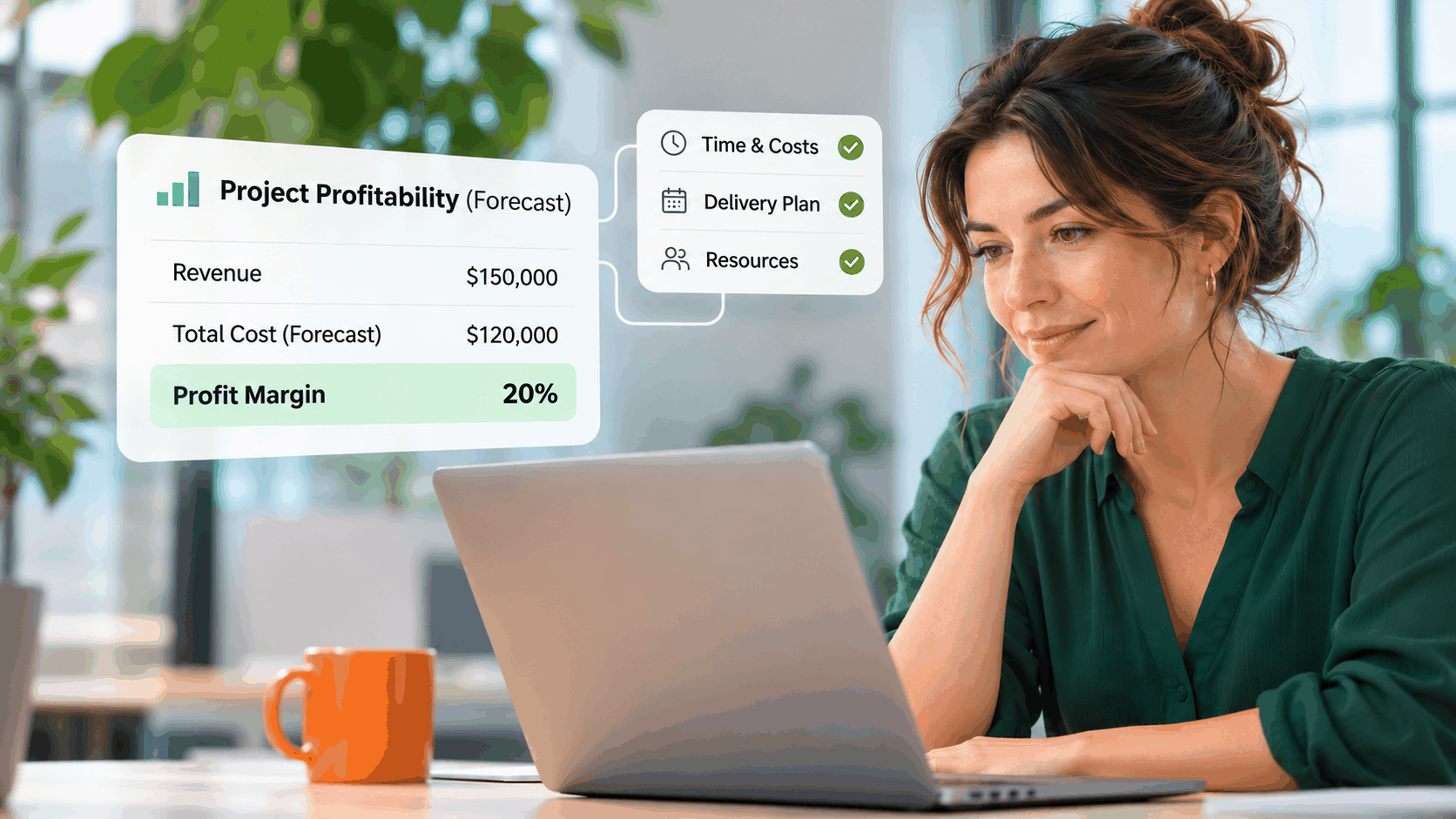
The project has incurred $62,000 against its original $90,000 cost estimate. But with another $58,000 in expected costs, its forecast margin has fallen from 40% to 20%.
Every recorded time entry may be accurate. The financial risk becomes clear when you account for the work still required to complete the engagement.
Can your current systems give you that forward-looking view without manually combining reports and updating financial assumptions?
That's an important consideration when evaluating whether your time-tracking and project management tools provide sufficient financial visibility.
How Accelo Connects Time Tracking to Project Profitability
Accelo connects time tracking with project delivery, AI-powered resource planning, and predictive profitability.
By bringing recorded hours, project schedules, resource requirements, and financial data together, Accelo helps professional services organizations evaluate the financial impact of delivery decisions and anticipate potential margin risks.
Put project managers back in control of project profitability.
Instead of waiting for month-end reporting to reveal whether a client engagement is taking more time and resources than planned, give them the visibility to spot problems early, adjust delivery, and protect margins while there's still time to act.
Is it time to reconsider your approach?
If Harvest meets your time-tracking and invoicing needs, replacing it with another standalone application may offer little operational advantage. But if maintaining visibility into project profitability requires reconciling data across multiple systems, you may want to reconsider how those functions work together.
Explore our comparison of Harvest alternatives to understand your options. Or book a demo to see how Accelo meets your time-tracking needs while giving you greater visibility into project delivery, resource planning, and predictive profitability.